
California Sweepstakes Casino Ban: What AB-831 Means for Players
 Available in US
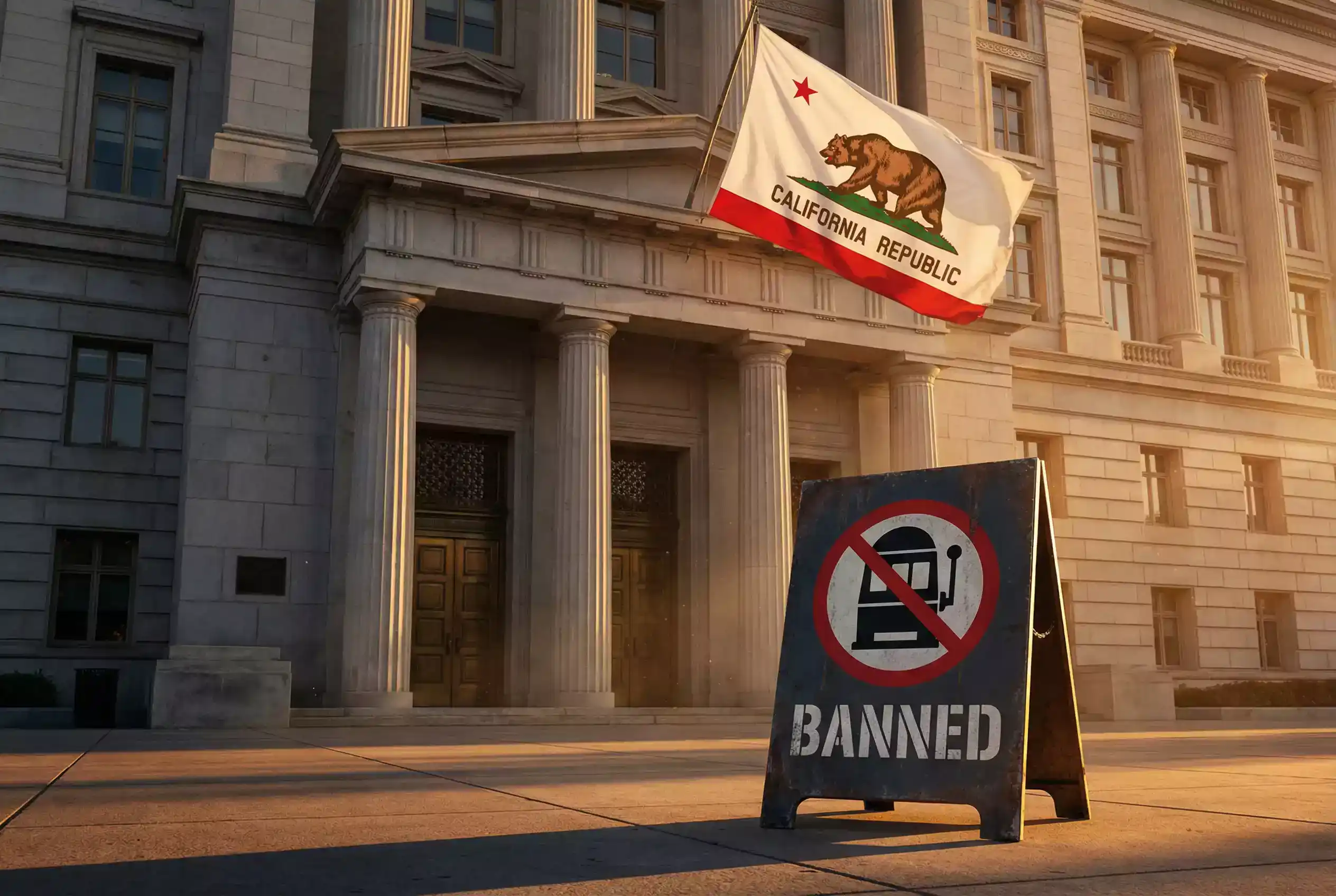
Governor Gavin Newsom signed AB-831 into law in late 2025, and on January 1, 2026, California became the largest state by population to outright ban sweepstakes casinos. The platforms that millions of Californians used to collect free Sweeps Coins and redeem them for cash prizes simply stopped serving the state overnight.
This wasn’t a regulatory adjustment or licensing requirement. California chose the nuclear option: complete prohibition. Operating a sweepstakes casino in the state now carries criminal penalties. For players, that means Chumba Casino, Stake.us, and every similar platform either geo-blocked California users or shut down operations entirely.
The stakes here extend beyond California’s borders. The state represented between 17 and 20 percent of the entire US sweepstakes casino market, according to analysts at Eilers & Krejcik Gaming. When one-fifth of an industry’s domestic revenue disappears on a single day, ripple effects are inevitable. Other states now have a template—and an emboldened coalition—for similar bans.
Inside AB-831: Penalties, Scope, and Who Gets Hit
AB-831 doesn’t dance around definitions. The law adds Section 337o to the California Penal Code and classifies sweepstakes casinos as illegal gambling operations. Any business that offers a game resembling a slot machine, card game, or casino-style game where prizes can be redeemed for monetary value—regardless of how cleverly the virtual currency model is structured—falls under the ban.
The penalties are structured to hurt. First-time violations can result in fines ranging from $1,000 to $25,000 per offense, and that “per offense” language matters because each transaction could theoretically constitute a separate violation. Repeat offenders face escalating fines. And this isn’t purely civil: the law includes criminal provisions allowing for misdemeanor charges carrying up to one year in county jail.
Operators aren’t the only targets. The law extends to payment processors, advertising networks, and potentially even affiliates who promote sweepstakes casinos to California residents. This comprehensive approach explains why platforms chose complete withdrawal rather than risk exposure. When your payment provider faces legal liability for processing transactions, the business model collapses.
For players, there’s an important distinction: AB-831 targets operators and facilitators, not individual users. Californians aren’t going to face prosecution for past participation. However, attempting to access these platforms using VPNs or other circumvention methods creates genuine legal risk. Several platforms explicitly state in updated terms of service that California users are prohibited, and violating those terms could complicate any future redemption disputes or create issues with financial institutions flagging suspicious activity.
The law’s drafters anticipated the sweepstakes industry’s primary defense. Operators have long argued that their dual-currency model—free coins for play, separate redeemable coins earned through sweepstakes—doesn’t constitute gambling because no purchase is necessary to participate. AB-831 sidesteps this argument entirely by focusing on the functional reality: if the platform looks like gambling and pays out like gambling, California will treat it as gambling.
Why California Voted Unanimously to Ban Sweepstakes
The vote count tells the story: 36-0 in the Senate, 79-0 in the Assembly. In a state legislature known for partisan gridlock, AB-831 achieved something rare—universal agreement that sweepstakes casinos had to go. Understanding why requires following the money and the politics.
California’s tribal gaming industry represents one of the most powerful lobbying forces in state politics. The tribes operate 66 casinos generating billions in annual revenue, and they’ve spent decades negotiating exclusive compacts with the state government. Sweepstakes casinos, operating without licenses, regulation, or revenue-sharing agreements, looked like poachers on protected territory. The tribes saw an existential threat and mobilized accordingly.
Card rooms—the state’s licensed poker establishments—joined the tribal coalition. These businesses pay substantial fees for the privilege of operating within California’s regulatory framework. Watching sweepstakes platforms offer casino-style games with zero regulatory burden created a competitive imbalance that card room operators called fundamentally unfair.
The coalition wasn’t purely commercial. Consumer protection advocates raised concerns about the lack of responsible gaming requirements on sweepstakes platforms. Traditional casinos must fund problem gambling programs, display warnings, and allow self-exclusion. Sweepstakes sites operated under no such obligations. Public health arguments provided political cover for legislators who might otherwise hesitate to side with gaming interests.
The sweepstakes industry attempted a counter-offensive. The Sweepstakes Gaming Legalization Alliance, representing major platforms, funded polling showing that 77 percent of California residents believed sweepstakes casinos should continue operating and 85 percent preferred regulation and taxation over outright prohibition. Jeff Duncan, SGLA Executive Director, argued that the ban would “strip $1 billion out of the state’s economy.” But surveys don’t vote in Sacramento. When tribal gaming dollars met consumer protection rhetoric, the industry’s libertarian arguments about personal choice found no traction.
Some legislators openly acknowledged the compromise involved. Supporting a ban meant choosing established interests over a newer industry that genuinely provided entertainment to millions. But pragmatic politics won: tribal compacts fund state programs, sweepstakes casinos funded nothing.
Legal Alternatives for California Players
California didn’t ban gambling—it banned a specific category of online gambling that operated outside the regulatory framework. Residents looking for legal gaming options still have several avenues, though none quite replicate the convenience of a sweepstakes app on your phone.
Tribal casinos remain the most direct substitute for casino-style gaming. With more than 60 tribal gaming operations spread across the state, most Californians live within reasonable driving distance of a physical casino. These facilities offer everything sweepstakes sites provided—slots, table games, poker—plus amenities that digital platforms can’t match. The obvious trade-off is travel time and the loss of play-from-your-couch accessibility.
Daily fantasy sports platforms like DraftKings and FanDuel continue operating legally in California. While structurally different from casino gaming, DFS offers competition, strategy, and real-money prizes. For players whose sweepstakes casino use centered on the thrill of competition rather than slot mechanics, fantasy sports might scratch that itch.
Horse racing, both live and simulcast, remains fully legal. California’s race tracks and off-track betting facilities allow parimutuel wagering on races throughout the state and nationwide. Advanced deposit wagering sites let residents bet from home through licensed platforms. It’s not the same as spinning a slot, but it’s legitimate, regulated, and available.
What California players should avoid: attempting to access sweepstakes casinos through VPNs or other geo-spoofing tools. Beyond the ethical questions, the practical risks are substantial. Platforms routinely flag VPN traffic, and accounts can be frozen or terminated. Any balance you’ve built becomes inaccessible, and the platform has no obligation to honor redemption requests from users who violated terms of service. Additionally, your financial institution might flag transactions as suspicious if they detect California-originating payments to known offshore gaming sites.
Some players have considered traveling to neighboring states to access sweepstakes platforms legally. This works for individual sessions if you’re physically in Arizona or Oregon (states where sweepstakes casinos currently operate), but it’s obviously not a sustainable daily practice for most people. Note that Nevada also passed legislation (SB 256) targeting unlicensed sweepstakes operators in 2025, effectively forcing most platforms out of the state.
Will California Ever Lift the Ban?
The unanimous vote makes near-term reversal politically difficult. No legislator wants to vote for sweepstakes casinos after voting against them, especially with tribal gaming interests watching closely and contributing to campaign funds. The coalition that passed AB-831 remains intact and vigilant.
The most plausible path forward involves broader gaming expansion through ballot initiative. California voters have repeatedly rejected sports betting propositions backed by both tribal and commercial interests, but the composition and framing of future initiatives could change. If tribes eventually embrace a regulated sweepstakes model that includes them as beneficiaries, the political calculus shifts entirely.
Meanwhile, the sweepstakes industry faces an uncomfortable reality. Six states passed sweepstakes bans in 2025—California, New York, Connecticut, Montana, New Jersey, and Nevada—and regulatory pressure continues building. More than 100 cease-and-desist letters were sent to operators throughout the year, and over 100 class action lawsuits were filed nationwide. The industry’s best hope might be federal preemption or a shift toward proactive licensing frameworks that bring sweepstakes operators into regulated markets. Some industry voices have called for exactly that approach: accept regulation, pay taxes, and gain legitimacy.
For California players, the practical timeline for any legal return of sweepstakes casinos extends to 2028 at the earliest—and likely longer. The current regulatory environment treats sweepstakes as a problem to eliminate, not an opportunity to capture. Until that fundamental perspective changes, the ban holds.
California Sweepstakes Casino Ban — More on this topic at free sc online casino.
See also Stake.us Review.
Created by the "Free SC Online Casino" editorial team.