Sweepstakes Casino Regulation 2026: Industry Future and Laws
 Available in US
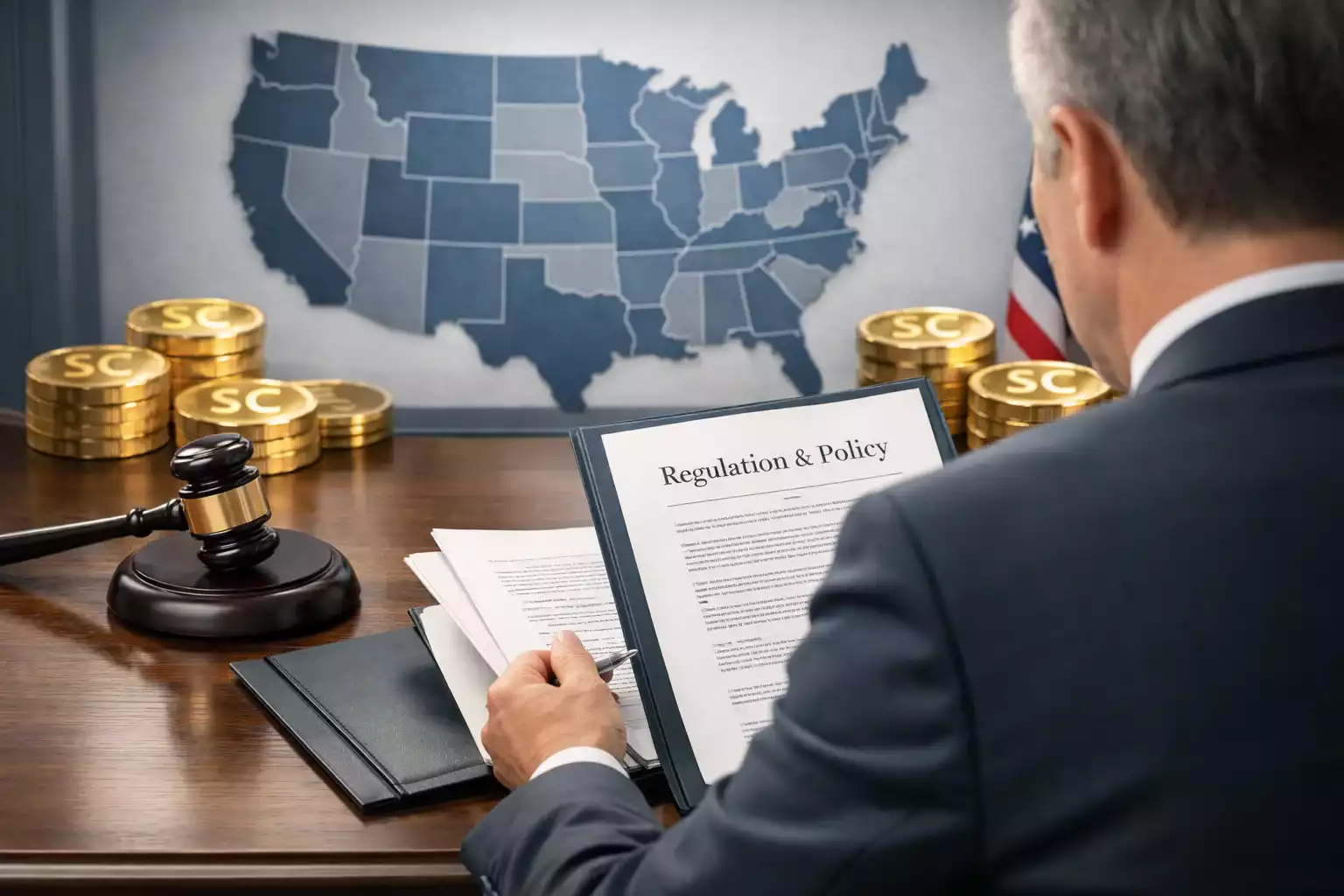
The sweepstakes casino industry grew from obscurity to generating over $10 billion in gross revenue by 2024, according to data from KPMG’s emerging industry analysis—and did so largely without dedicated regulatory frameworks. That regulatory vacuum is closing rapidly. Six states enacted sweepstakes casino bans in 2025 alone, attorneys general issued over 100 cease-and-desist letters to operators, and legislative bodies across the country are deciding whether to regulate, prohibit, or continue ignoring an industry that now rivals legal iGaming in scale.
The regulatory trajectory for 2026 and beyond will determine whether sweepstakes casinos remain accessible to the estimated 38 million Americans who use them, whether they become integrated into state gambling frameworks with licensing and taxation, or whether the model gets squeezed into an increasingly narrow geographic footprint. Players watching this space have reason to pay attention: the platforms available today may not exist in their current form by next year.
This analysis covers where sweepstakes regulation currently stands, what the National Council of Legislators from Gaming States proposes through their model legislation, how operators are responding to regulatory pressure, and what reasonable predictions emerge about the industry’s future. The outcome matters enormously for anyone who plays at these platforms.
Current Regulatory Status
Sweepstakes casinos exist in a regulatory gray zone that frustrates both traditional gambling interests and consumer protection advocates. The industry argues its dual-currency model—purchasing Gold Coins with Sweeps Coins included as promotional bonuses—constitutes legitimate sweepstakes promotions rather than gambling. Critics counter that the practical experience is indistinguishable from online casinos and that the legal structure represents exactly what AGA President Bill Miller called “legal acrobatics to avoid calling themselves betting or gambling.”
No federal framework specifically governs sweepstakes casinos. State responses have varied dramatically. Washington prohibited the model years ago. Idaho and Nevada never permitted operations. The major 2025 developments saw California ban sweepstakes casinos through AB-831, effective January 2026, with Montana following through SB555. Additional states including New York took enforcement actions without new legislation—the New York Attorney General’s office sent cease-and-desist letters to 26 platforms, according to the AG’s official announcement.
Meanwhile, sweepstakes casinos remain available in roughly 35-40 states where neither explicit prohibitions nor clear authorization exist. Operators interpret this silence as permission; regulators in those states either lack enforcement appetite, competing priorities, or clear legal authority to act. This ambiguous status creates uncertainty for everyone—players don’t know whether their platforms will remain accessible, and operators can’t confidently invest in states that might close doors tomorrow.
The traditional gambling industry—commercial casinos and tribal gaming operations—has emerged as the primary opponent of sweepstakes expansion. These established interests view sweepstakes casinos as competitors operating without licensing costs, tax obligations, or regulatory compliance burdens that traditional operators bear. Their lobbying efforts have driven much of the legislative activity restricting sweepstakes operations.
Class action litigation has exploded, with over 100 lawsuits filed against sweepstakes operators in 2025 according to Gambling Insider analysis. Plaintiffs typically argue the platforms constitute illegal gambling regardless of promotional framing, seeking damages and operational restrictions. These suits create legal costs and uncertainty even when operators ultimately prevail.
The NCLGS Model Act
The National Council of Legislators from Gaming States provides model legislation that individual states can adopt or adapt. Their approach to sweepstakes casinos would bring operators under gambling regulatory frameworks—requiring licensing, mandating consumer protections, and establishing tax obligations that currently don’t apply.
The NCLGS model recommends penalties of $10,000 to $100,000 per violation for operators failing to comply with licensing requirements, according to their publicly discussed framework. This penalty structure would make unlicensed operation financially untenable for legitimate businesses, effectively forcing platforms to either obtain licenses or exit non-compliant states.
NCLGS President Shawn Fluharty, a West Virginia delegate, has been particularly vocal. Speaking at the NCLGS Winter Conference: “Sweepstakes represent illegal gambling and revenue theft in many states. Rarely do we agree on anything as lawmakers, but on this issue, we agree that this represents illegal gambling operations.” This bipartisan consensus among gaming legislators—who typically understand gambling policy more deeply than general assembly members—suggests regulatory pressure will continue regardless of which party controls individual statehouses.
The model act approach would standardize state responses rather than leaving sweepstakes regulation to fragmented attorney general actions and one-off legislative prohibitions. States could adopt the framework wholesale or modify provisions for local preferences. The effect would be either legitimizing sweepstakes casinos as regulated gambling entities or clearly prohibiting operations under gambling statutes—ending the current gray-zone status.
Adoption remains voluntary, and states have shown varied appetites for comprehensive gambling regulation. Some legislators prefer outright bans to creating new regulatory bureaucracies. Others see taxation potential that makes regulation attractive. The model act provides a template, but political dynamics in each state will determine whether adoption occurs.
Industry Response
The sweepstakes industry has organized through the Social Gaming Leadership Alliance (SGLA) to advocate for regulatory frameworks that allow continued operations. Their position represents a notable evolution from simply arguing for legality toward actively seeking regulation.
SGLA Executive Director Jeff Duncan has articulated this position clearly at the NCLGS conference: “We want to be regulated, we want to pay taxes. In a regulated, taxed environment, there is an opportunity to help the budget of the states that are struggling.” This approach attempts to reframe operators not as gaming outlaws but as potential tax revenue sources willing to accept oversight—contrasting with the existing gambling industry’s characterization of sweepstakes as unregulated competition.
The industry’s willingness to accept regulation comes with preferences about what that regulation should look like. SGLA advocates for frameworks recognizing the sweepstakes model’s distinctions from traditional gambling—the promotional currency structure, no-purchase-necessary requirements, and existing consumer protections some platforms already implement. They seek licensing paths that don’t simply force sweepstakes operations into frameworks designed for different gaming models.
Individual operators have adopted varying stances. Some quietly exited states upon receiving cease-and-desist letters, calculating that compliance was simpler than legal battles. Others have contested regulatory interpretations, arguing that sweepstakes promotions are protected commercial speech and that state gambling statutes don’t apply to their business models. The results have been mixed—some challenges succeed, others result in permanent market exits.
The industry has also invested in responsible gaming measures, attempting to preempt criticism that unregulated platforms lack consumer protections. Self-exclusion tools, deposit limits, and reality-check features now appear on major platforms. Whether these voluntary measures satisfy regulators or simply serve as talking points during legislative debates remains to be seen.
Critically, the industry recognizes that geography is shrinking. California’s ban removed roughly 17-20% of the US sweepstakes market. Further state prohibitions could make the model economically unviable—fixed operational costs spread across fewer players eventually break the math. This existential pressure explains the pivot toward seeking regulation rather than simply defending the status quo.
Predictions for 2026 and Beyond
Regulatory outcomes will likely fragment further before any consolidation occurs. Some states will ban sweepstakes casinos outright, following California and Montana’s lead. Others will pursue regulation that allows continued operations under licensing frameworks. Many will continue ignoring the issue until forced to act by constituent complaints, legislative pressure, or court decisions.
The states most likely to enact restrictions share common characteristics: strong existing gambling industries with lobbying power, attorneys general receptive to gaming industry concerns, and legislatures where gambling expansion faces ideological opposition. Florida, where pending legislation has advanced, represents a critical test case given its significant player population—SGLA economic impact data indicates Florida accounts for 8.5% of sweepstakes revenue.
Litigation will continue shaping the landscape. Class action outcomes establishing precedents about whether sweepstakes models constitute gambling could accelerate or constrain regulatory efforts. A major court ruling declaring the model illegal gambling would force rapid responses; a ruling affirming sweepstakes legitimacy would strengthen operators’ negotiating positions.
Industry consolidation seems probable regardless of regulatory outcomes. Smaller operators lacking resources for multi-state compliance, legal defense, and regulatory engagement will exit or merge with larger players. The market leaders—particularly VGW with its dominant Chumba Casino position—have the scale to absorb compliance costs that would be prohibitive for smaller competitors.
Federal attention remains possible though not imminent. Congressional interest in online gambling has been sporadic, with states preferring to maintain regulatory authority. However, the sweepstakes industry’s interstate nature—platforms accessible across state lines with varying legal statuses—creates exactly the kind of regulatory confusion that historically attracted federal intervention. A major consumer harm incident or prominent enforcement failure could accelerate federal involvement.
The most likely medium-term outcome involves a patchwork: perhaps 10-15 states with explicit prohibitions, another 5-10 with licensed regulated operations, and the remainder continuing current ambiguous status until circumstances force decisions.
Implications for Players
Regulatory uncertainty affects players in practical ways that extend beyond abstract policy debates. Understanding these implications helps with decision-making about platform selection, balance management, and expectations.
Platform availability can change abruptly. When California enacted its ban, players received limited notice before losing access. Balances had to be redeemed quickly or potentially forfeited depending on platform policies. Players maintaining substantial unredeemed balances face risk that state action could force rapid withdrawals or worse—platforms might exit states with insufficient warning for orderly redemption.
Verification and redemption matter more in uncertain regulatory environments. Platforms facing legal pressure may tighten procedures, slow processing, or implement new requirements. Completing verification early—before reaching redemption thresholds—ensures you’re positioned to cash out if circumstances change. Letting redeemable balances accumulate indefinitely carries risk that didn’t exist when the industry operated without regulatory attention.
Platform selection should weight operational stability. Larger, established operators with legal resources and compliance infrastructure are better positioned to navigate regulatory challenges. Smaller platforms might offer attractive bonuses but carry higher exit risk if legal pressures mount. The bonus differential rarely compensates for redemption uncertainty.
Geographic mobility creates complications. Players who move between states with different sweepstakes status may face account restrictions or closure. Address changes trigger re-verification, and platforms may suspend accounts pending confirmation of continued eligibility. Understanding your state’s current status and monitoring pending legislation helps avoid surprises.
Regulation, if it comes, would likely bring changes even for states that license rather than ban sweepstakes casinos. Licensed operations might require higher minimum ages, implement stricter verification, or modify bonus structures to comply with promotional gaming regulations. The current model exists partly because of regulatory absence—oversight would inevitably change how platforms operate.
For now, sweepstakes casinos remain accessible across most of the country. That accessibility isn’t guaranteed to continue. Players benefiting from current conditions should recognize the temporary nature of regulatory ambiguity and plan accordingly.
Sweepstakes Casino Regulation 2026 — More on this topic at free sc online casino.
See also Who Plays Sweepstakes Casinos? Player Demographics 2026.
Created by the "Free SC Online Casino" editorial team.